Hello everyone!
For non-French speakers who do not know us, we are La Pierre de Tear, the French association dedicated to The Wheel of Time. Our association aims to bring together French-speaking fans of Robert Jordan’s work, as well as those of Brandon Sanderson, who has taken over writing the final Wheel of Time volumes, as well as fantasy in general.
And today, we are delighted to interview Pamela Forster, an Austrian stunt performer and athlete with an impressive career!
Born in Vienna, she is a specialist in freerunning and parkour. Pamela has made a name for herself in the demanding world of movie stunts, where she brings her agility and energy to major international productions.
We’ve seen her work in films such as Wonder Woman 1984, Doctor Strange in the Multiverse of Madness, and The Marvels, as well as in the hit Prime Video series The Wheel of Time, where she took part in several spectacular action sequences.
She is also took part in shows like Ninja Warrior Germany and Ninja Warrior Austria.
Combining discipline, creativity, and a passion for movement, Pamela Forster embodies a new generation of stunt performers who push the limits of physical performance while telling a story through motion.
As you can see, it was super interesting to have Pamela’s feedback about her job, which is sometimes not very well known. You will find her answers to our questions below.
INTERVIEW:
I would like to start from the beginning. I’m always curious to hear about the professional journeys of the people I meet. So I’d like to know — how did you become a stunt performer?
That’s a great question, because there are many different paths into the stunt world — and this is my personal one.
I started with gymnastics when I was nine years old. Later on, I discovered my passion for parkour and freerunning, which completely changed my perspective on movement. Through that, I had the opportunity to take part in Red Bull Art of Motion events, which allowed me to meet athletes and creatives from all over the world.
My very first stunt job was a chase scene. I had to run away, jump out of a window, and perform some acrobatics in between. What made it especially exciting for me was getting dressed like the actress, putting on a wig, and stepping into that character for the scene.
From there, I started learning more about the wide range of skills required for stunt work — including falling techniques, fight choreography, wire work, and other disciplines. Over time, all of these elements came together and shaped my path into becoming a stunt performer, but I still see myself as a student. There is always more to learn.
We’re not very familiar with your line of work. Could you explain what it actually involves?
Being a stunt performer is very versatile. The job is basically about performing action scenes from the script in a way that makes them look exciting while keeping everyone involved as safe as possible.
Some scenes are relatively simple and not particularly dangerous, so they don’t require extensive preparation. In those cases, you might come to set and perform the action with only minimal rehearsal on the shooting day.
But very often, action scenes are complex, physically demanding, potentially dangerous, and sometimes combined with special effects. In those situations, the preparation can start months in advance. We carefully think through how the scene can be executed safely and convincingly.
We train with specialists from different disciplines — for example horse riding professionals or fight choreographers — and we often create previsualizations (PREVIZ), filming a rough version of how the scene might look. When the director is happy with the PREVIZ, actors will be prepared for the action through training and rehearsals.
By the time we reach the shooting day and all departments come together — hair and makeup, costumes, camera, special effects, etc — everyone knows exactly what will happen, understands the risks, and knows their role. That preparation is what allows us to minimize danger and make sure everything runs as smoothly and safely as possible.
It’s also important to understand that it’s not just about stunt doubles stepping in for actors when needed. Very often, there is an entire core team behind the scenes whose main responsibility is to make sure everything around the action is safe.
Stunt work is always a team effort, built on trust, communication, and shared responsibility for everyone on set.
Do you need any specific training (martial arts, gymnastics, horse riding, etc.) for this profession?
Most stunt performers I know come from a specific background — in my case, it was parkour, freerunning, and acrobatics. But over the course of my career, I’ve been lucky to learn from some of the best in the industry, gaining skills like fight choreography with and without weapons, fire stunts, wire work, and much more.
The more skills you have, the more opportunities you get on set, because it’s always helpful to the production if one performer can cover multiple types of scenes. I would say martial arts skills are particularly important. Understanding how to sell a punch and having basic acting skills are also important abilities a stunt performer should have.
But being a good performer isn’t just about technical ability — you also need to show that you’re a team player, that you know when to step in and when to step back. If you want to work in stunts long-term, you need to demonstrate those skills and that mindset as well.
In your opinion, what is the most important quality for a stunt performer?
As a stunt performer, of course experience helps a lot, but even if you’re just starting out, there is always someone on set who knows exactly how to behave and what to do. Watching them and learning as much as you can is key.
So, I would say the most important quality is understanding how the industry works and knowing how to keep everyone — including yourself — safe at all times.
How do you deal with fear or risk during dangerous scenes?
This is actually a tough question, because I personally struggle with it a lot. I’m always aware that something could go wrong, and sometimes I even imagine the worst-case scenario — often very unrealistic — which obviously doesn’t help when you need to focus and perform. There are things I don’t feel comfortable doing, and in those cases, I simply won’t do them. It’s important to know your limits, and when to push yourself and when to step back.
Since this is something I deal with regularly, I work with a mental coach and have learned techniques to help me approach the actual danger more realistically. I also talk a lot with my stunt coordinator about the sequence and everything involved. Knowing exactly what will happen in the scene helps me prepare better, work through the risks, and minimize them through practice and rehearsal.
How did you become involved in The Wheel of Time?
I actually first worked with the stunt coordinator from The Wheel of Time a long time ago on a commercial. He got to know me and thought I would be a good fit to stunt for a few of the actresses on the show. Luckily, I had just finished a project in England and was available, which worked out perfectly. I’m really happy I was part of it, because I got to meet so many talented colleagues who eventually became close friends.
What does a typical day on the set of The Wheel of Time look like for a stunt performer?
A typical day for me starts either with getting picked up by a driver or driving myself to set. Once I arrive at base, I check in with the ADs and put my stuff in the trailer. Depending on the location, I either grab breakfast in a tent or in the studio. Then I put on my basic layers and pads for the day.
Next, I go to hair and makeup to get my wig on, followed by my costume. Once I’m ready, I let the ADs know I’m good to travel to the set. On set, we get a safety briefing so that every department knows exactly what’s happening that day.
Once the lights are set, the camera is ready, and all departments are happy, we start shooting the scene. The director watches closely and gives notes. If the scene involves the actress I’m doubling, she comes on set once everything is prepared. We often walk through the scene again to answer any last questions, warm up the actress, and then shoot as much as possible with her. While she’s performing, I watch the monitors carefully, so if I’m needed, I know exactly how she moved and can either copy her movements or pick up where she left off. Most scenes require multiple takes.
When it’s a wrap, I go back to base, return the wig and costume, and then head home.
On your Instagram account, where you share a lot about your experience — which is great — we saw that you’ve doubled for several actresses, such as Ayoola Smart (Aviendha) and Madeleine Madden (Egwene). Which stunt double performance was your favorite?
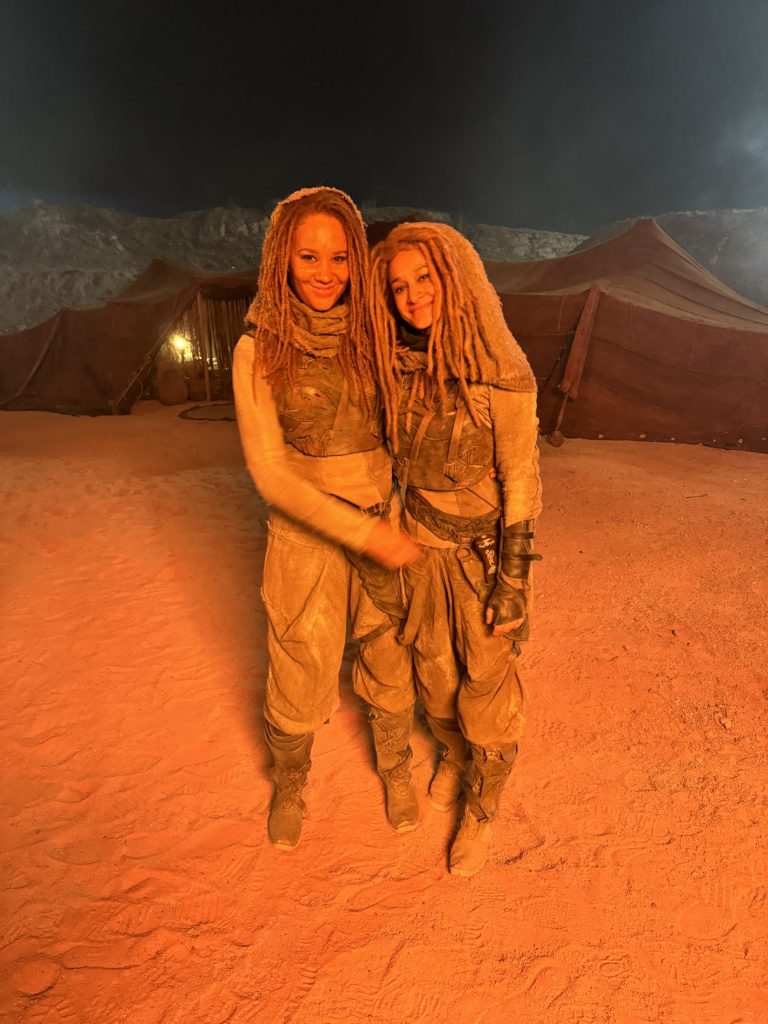
I have to say I loved doubling all the different characters, because each of them required different skills. But my absolute favorite was doubling for Ayoola, who plays such a badass character with two spears.
I had never fought with two spears before, so I had to learn how to use them properly. I remember during breaks, I would have the spears in my hands and practice swinging and moving with them.
Sometimes even dressed as a different character, just playing around with the spears — I couldn’t get enough of it!
There are two impressive scenes from season 3 that really stuck with me: the Battle of the Two Rivers and the opening scene of season 3 with the battle against the Black Ajah.
I saw some photos of you working on these two major moments of the latest season. Could you tell us how you prepared for them?
Honestly, it’s hard to answer this briefly, because there’s so much to say about both scenes.
The first scene we prepared was the battle against the Black Ajah. I remember we were in the White Tower, and all the stunt performers wore different colored t-shirts so everyone knew where they belonged, while the Black Ajah members were marked with tape on their shirts. There was so much going on in that scene that had to be perfectly coordinated.
Liandrin’s character was lifted on wires, hanging in the air with her face covered in fake blood, while Leane was swinging her weapon — and Jennifer did all of that herself. We saw her almost every day in the gym training with our coaches so she was able to perform the fight scenes on her own.
During the scene, the SFX team shattered windows with crash glass right in front of our faces, while stunt performers were pulled on wires and fire was also involved, which added extra elements we had to be aware of. We also had to learn special hand techniques for the Black Ajah to perform their spells, which were different from those of the other Ajahs.
Everything was filmed with a camera on tracks moving rapidly around the scene, so character positions and timing were absolutely key and required a lot of rehearsals to get right.
In that scene, I personally doubled for Nynaeve, who was thrown under the columns after they break. The columns were breakable built with dust in between, and triggered by the SFX team.
After a week of shooting, we left that set with nothing but dust. It was insane, but also so much fun!
The Battle of the Two Rivers was on a whole different level.
First of all, we were outside on one of the most beautiful outdoor sets I’ve ever been on. There were over 150 performers, all armed and ready to fight. We prepared the entire sequence for weeks, carefully putting all the smaller pieces together — from the siege of the village, the women’s circle, and Faile’s fight, to many other moments that all had to come together in one big battle. There were so many elements we needed to bring to life and fit into this single sequence. We worked closely with the set builders to make sure people could safely walk on rooftops. Many of the huts had to burn, which meant they were on fire for several nights in a row. There were explosions, a lot of real fire, and around 20 horses that needed to be coordinated and taken care of. It was an all-night shoot, so it was dark, cold, and wet, and we filmed the scene for a week or more.
One of the most impressive parts was the Trolloc performers. Their costumes are incredibly hot and heavy to wear, and they had to walk on stilts! Each of them had a seat to rest during breaks and their own personal assistant to help them remove their heads, bring drinks, and keep them hydrated. I also remember that it was October and my birthday on one of these days, and we had such a fun night on set despite the tough conditions — a really unforgettable experience.
Did you have to work with the main actors to coordinate their fight movements?
I had the pleasure of working closely with most of the actresses I doubled, for example with Daniel and Ayoola on their fight scenes. We started by training separately — I worked as Aviendha’s double with Daniel, and Lan’s double trained with Ayoola. Once both sides were comfortable with the choreography, Daniel and Ayoola began fighting together, first in our gym and later on set.
On set, the conditions were more challenging: the costumes were incredible and so carefully made, but naturally they can limit movement more than typical sportswear. On top of that, it was dark and the ground was sandy but we shot this whole fight in one night.
The same approach applied to scenes like the strangulation sequence with Madeleine and Natasha. Both of them came to the gym, where we went through different variations and rehearsed how Madeleine could safely go to the ground while being strangled, and how Natasha could apply the grip so it looked brutal without actually hurting her.
Which stunts or action scenes from the shoot stood out the most to you?
My personal highlight was the fight between Aviendha and Lan. I remember we shot this scene in South Africa at night, in the dark, and the week before I had been really sick and had to stay at home, missing a few rehearsals with Daniel and Ayoola. I still felt a bit weak on the day we shot it, but I was super excited to be back at work.
Performing as Aviendha alongside Daniel as Lan was very special to me. He was incredibly precise with his sword and timing, which made it much easier to perform safely while still maintaining speed and power. Ayoola was also amazing — she remembered the choreography effortlessly and handled the spears perfectly. It was such a pleasure to be part of that scene.
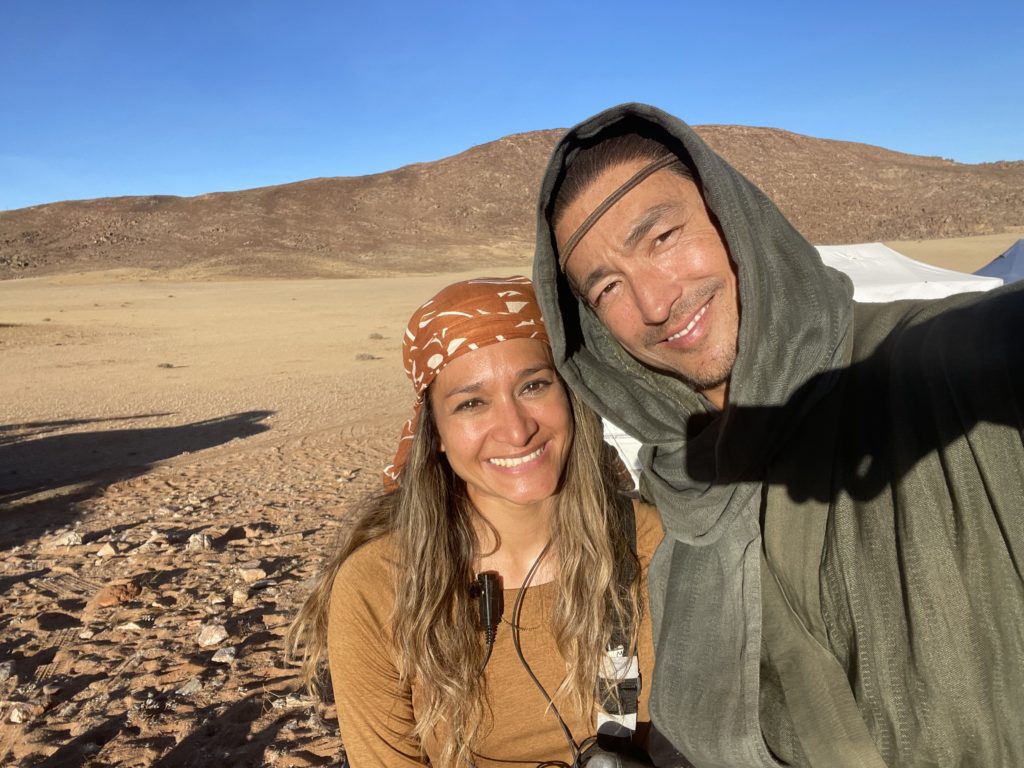
Maybe also the two rivers fight because it was just insane to see so many people perform and fight at the same time.
What was the most difficult (or the funniest) stunt to perform for The Wheel of Time?
The spinning wheel at the tanchico was funny. It made me so dizzy! Luckily, there were actually two of us, so we could swap once one of us got too dizzy.
Are there any common misconceptions about your profession — something you’d like people to better understand about what you do?
People sometimes say that stunt performers aren’t afraid of anything, like we are built from a different kind of wood— haha! I can only speak for myself, and honestly, I often have a lot of respect for the scenes I perform, maybe even more than I like to admit.
And it’s not always about doing the most dangerous stunts. Sometimes it’s something as small as being bumped on the shoulder, and even then, I’m there to make sure it looks real and stay safe. For me, being a stunt performer is less about fearlessness and more about respect, focus, and knowing exactly what I’m doing.
What has been the most memorable or impressive moment of your career so far? Being a stuntwoman requires a lot of courage. What did it teach you about yourself?
One of the most memorable moments of my career was sitting in the theater with my friends and family and seeing my name in the credits of my first big film. When they saw it, they applauded and cheered. It was such a special feeling to share that moment with them and see how proud they were — it made all the hard work and preparation feel even more worthwhile.
If you could choose, what kind of role or stunt would you like to explore in the future?
Honestly, I would love to explore something in comedy — maybe playing an agent or a character in a fun, action-comedy role.
Let’s end on a fun note! If you could become any character from The Wheel of Time, who would it be?
If I could become any character from The Wheel of Time, I would choose Egwene.
I really connect with her curiosity, determination, and constant desire to learn and grow.
Like Egwene, I see myself as a student — always learning new skills, improving, and taking on challenges.
She also has a strong sense of responsibility and looks out for others, which really resonates with me, because in my work as a stunt performer, safety, teamwork, and planning are everything.
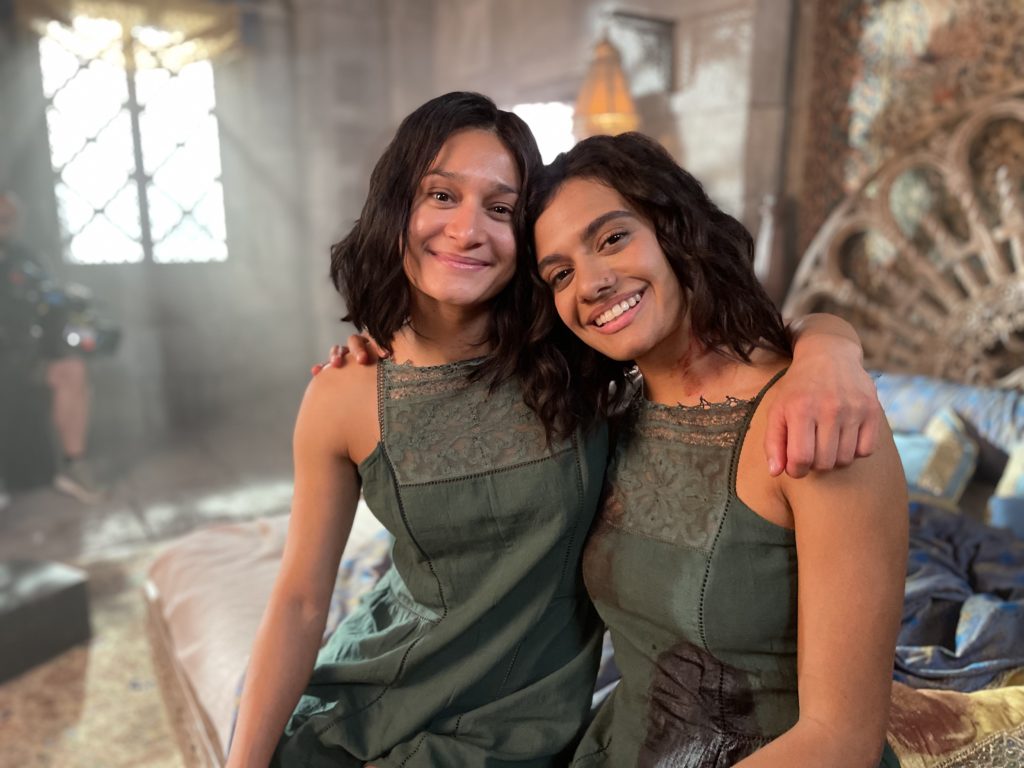
One of the things I admire most about her is her willpower and resilience — like in her scene where she is tortured, but she never gives up and stays true to herself no matter how hard the situation is. Her fighting spirit and determination are something I try to emulate, and in that regard, she’s a big inspiration for me. Egwene truly combines strength, intelligence, courage, and heart, and I feel that mirrors the balance I try to bring to both my professional and personal life.
Finally, what advice would you give to someone who dreams of becoming a stunt performer?
Train hard and try to gain some knowledge in many different areas. Build experience through workshops or even self-made projects and short films. Be kind, stay curious, and always be ready to learn more and help out whenever you can. Also try to connect with people in the industry.
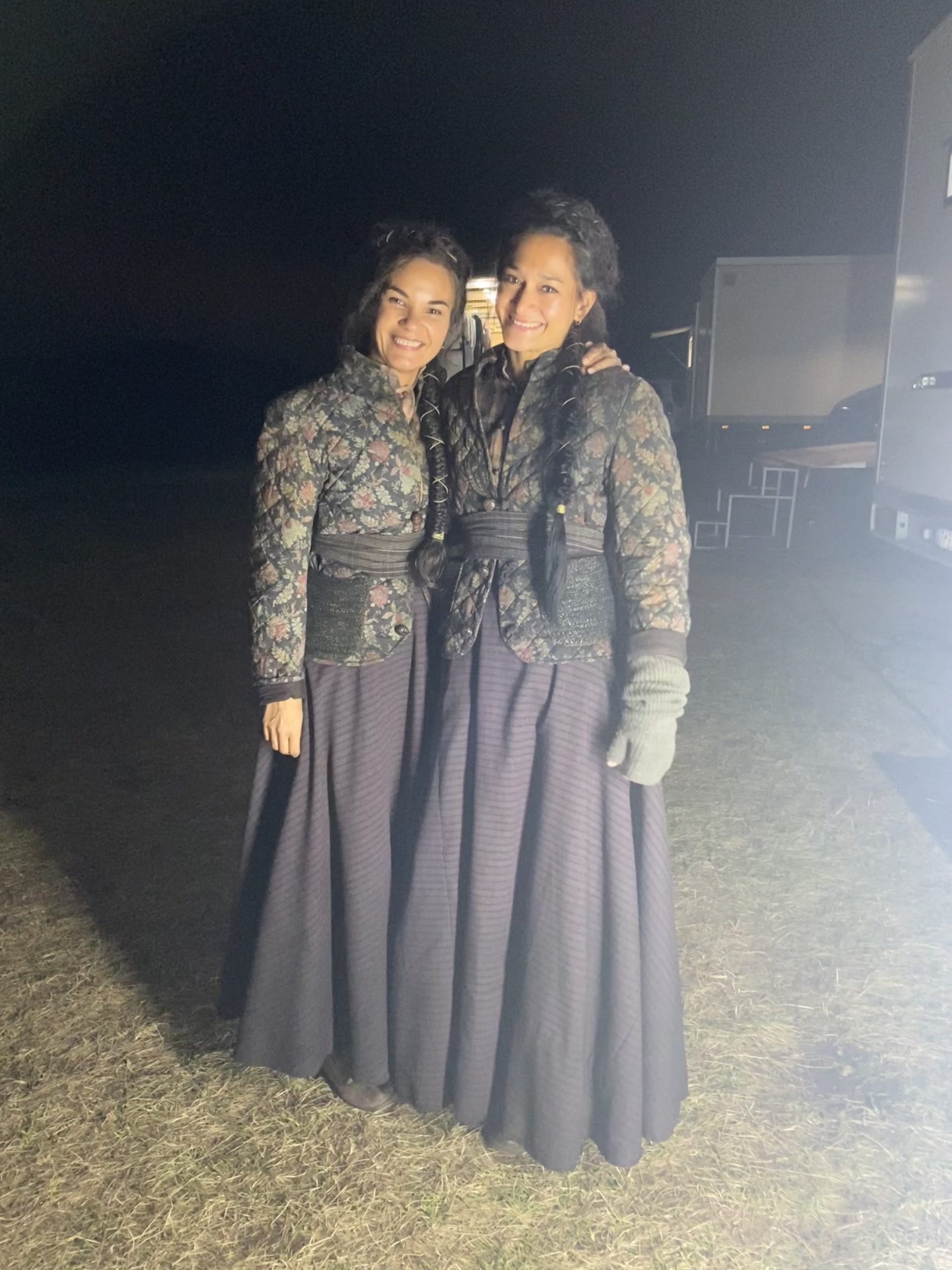
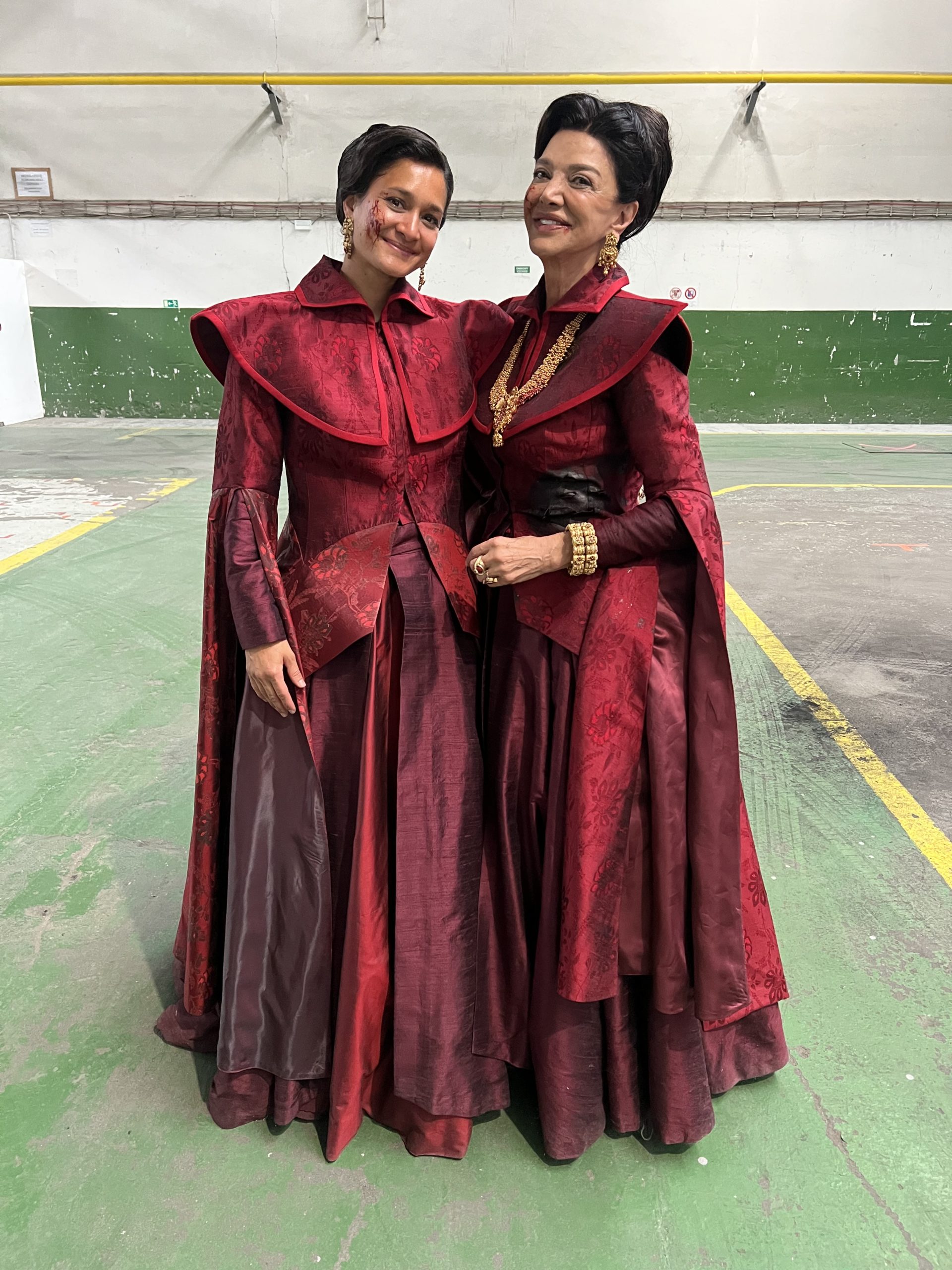
We would like to extend our sincere thanks to Pamela for taking the time to answer our many questions!
And thank you so much for sharing your pictures and videos! It is really cool to be able to visualize your job.
It’s always incredibly interesting to learn more about everyone’s work.
We wish you all the best for the future, and hope you get to work on an action-comedy role!
And if you want to learn more about VFX in The Wheel of Time, we wrote an article about it and interviewed the VFX Director Andy Scrase.